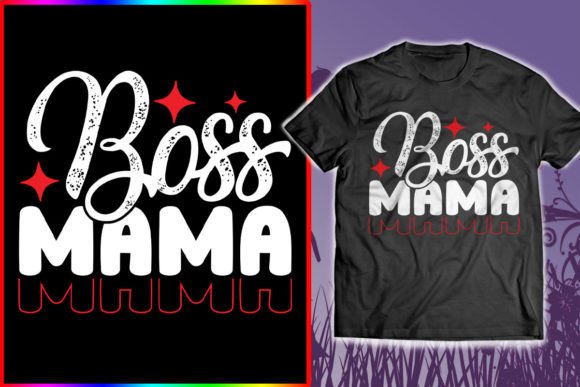
Boss Mama
First Impressions: Bold, Warm, and Instantly Recognizable
When I opened the Boss Mama file for the first time, I didn’t see just another Mother’s Day typography design—I saw a confident tone, clean rhythm, and a subtle balance between authority and affection. The letterforms are strong but not aggressive; rounded enough to feel approachable, structured enough to hold up in stitching. It’s not overly ornate—no swirls, no script flourishes—so it avoids looking dated or hard to digitize. That simplicity is its biggest strength for real embroidery work.
A Real Project Test: Embroidering Boss Mama on a Linen-Cotton Tote Bag
Last week, I used Boss Mama on a natural linen-cotton blend tote for a local boutique’s Mother’s Day pop-up. I chose a medium-weight cutaway stabilizer, 40-weight polyester thread in deep charcoal (for contrast), and a 5” hoop. The result? Crisp, legible lettering with no puckering—even across the fabric’s subtle texture. Customers paused, smiled, and said things like, “That’s *me*,” or “I need this for my sister.” That kind of instant resonance matters more than perfect kerning when you’re selling handmade product at a craft fair.
Where Boss Mama Shines—and Where It Needs Thought
Boss Mama works beautifully on stable, medium-to-heavy fabrics: sweatshirt fleece, canvas aprons, denim jackets, tea towels, and structured pillow covers. Its generous letter spacing and moderate height (roughly 3–4 inches wide at standard scaling) make it forgiving on curved surfaces like baseball caps—though I’d avoid placing it too close to the bill seam without testing first.
It’s less ideal for baby onesies or stretchy knit t-shirts unless resized carefully and paired with light tear-away stabilizer and reduced stitch density. Tiny lettering isn’t part of Boss Mama’s personality—it’s meant to be seen, not squinted at. So skip using it below 2.5” wide on thin or delicate fabrics where fill stitches might overwhelm the ground.
On dark fabric? Yes—but only if your thread color has enough contrast. I tested it in white and heather grey on navy twill: white popped cleanly; grey felt muted and lost some impact. Always check your thread colors against the final background—not just on screen.
Design Integrity Through the Embroidery Process
Because Boss Mama is delivered as vector files (EPS, CMYK/RGB), it scales cleanly—no pixelation when resizing for patches vs. sweatshirt backs. That flexibility matters whether you’re prepping an embroidered patch for iron-on application or digitizing it for multi-color satin-stitch execution. As a machine embroidery design, it doesn’t include built-in applique elements or decorative running-stitch borders, so it stays versatile: you can add those yourself—or leave it clean and modern.
I noticed the lowercase “a” and “m” have open counters—small but important. In dense fill stitch, those areas can close up if digitized poorly or stitched too tightly. My advice? If you’re converting this to an embroidery file yourself, leave breathing room in those inner shapes. Or better yet—test stitch a single letter on scrap fabric first.
Commercial Use & Customer Perception
For Etsy sellers and small shop owners, Boss Mama reads as premium, intentional, and gift-ready—not generic or clip-art-y. When stitched cleanly, it elevates a plain tote or sweatshirt into a curated handmade product. Buyers associate that clarity and confidence with care and craftsmanship. That perception directly supports pricing confidence: you’re not selling fabric—you’re selling recognition, identity, and emotional resonance.
But here’s what I watch closely: consistency across listings. If you use Boss Mama in your shop banner, your printable mockups, and your physical products, keep sizing, thread palette, and placement aligned. A mismatch between your digital preview and the finished product erodes trust faster than any typo.
Practical Notes Every Embroidery Designer Should Check
- Test before committing: Stitch Boss Mama on scrap fabric matching your final project’s weight and weave.
- Review stitch density: High-density fills may cause stiffness on lightweight apparel—adjust if needed.
- Confirm hoop size: At full width, it fits comfortably in a 5×7 hoop, but verify before hooping delicate garments.
- Inspect corners and curves: Look for tight turns where thread tension could pull or distort.
- Mock it up in black and white: Helps spot contrast issues before threading your machine.
- Check licensing: Since this is listed as a T-Shirt Design and Graphics asset, confirm whether commercial embroidery rights are included—especially if selling finished embroidered items or reselling digitized versions.
- Stabilizer choice matters: Cutaway for knits and heavy wear; tear-away for stable wovens like tea towels or aprons.
Final Thought: Not Just Typography—A Statement With Staying Power
Boss Mama isn’t trying to be everything. It’s focused, warm, and quietly powerful—like the people it’s made for. That focus makes it reliable across embroidery projects: from personalized gifts stitched on baby blankets to boutique merchandise on organic cotton tees. It doesn’t shout. It stands. And in a crowded digital embroidery file marketplace, that kind of quiet confidence is rare—and valuable.
If you’re choosing designs for your craft business, your Etsy shop, or your next client’s custom apparel order, Boss Mama earns its place not because it’s trendy, but because it’s thoughtful, adaptable, and built to last beyond one holiday season.