Can You Kindly STFU
First Impressions: Sarcasm That Lands—But Only Where It Belongs
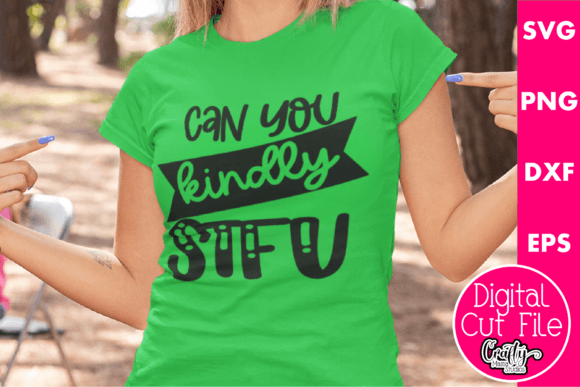
When I opened Can You Kindly STFU for the first time, my instinct wasn’t to laugh—it was to pause. This isn’t a shouty, all-caps meme slapped onto a shirt. There’s rhythm in the lettering: slightly uneven baseline, subtle weight shifts, and just enough irregularity to feel hand-drawn—not sloppy, but intentional. It reads like something you’d scribble on a sticky note during a Zoom call gone sideways. That tone is its strongest asset—and its biggest limitation. It works beautifully as a machine embroidery design when the context matches: think a boutique tote bag for a coworker who *gets it*, or a sweatshirt for a craft fair booth where irony is part of the brand voice.
A Real-World Test: Embroidering It on a Linen-Cotton Tote
Last week, I stitched Can You Kindly STFU onto a medium-weight linen-cotton blend tote—4.5" wide, centered on the front panel. Used a tear-away + light cutaway stabilizer combo, 40-weight polyester thread, and a size 75/11 needle. The result? Crisp, legible, and surprisingly balanced. The phrase held up across fabric texture without filling in or bleeding at the edges. No stitch density surprises—no dense fill stitches that would stiffen the bag or cause puckering. That said, it didn’t shine on thin jersey or stretchy knit. On those fabrics, the letterforms lost definition, especially the “F” and “U,” which rely on clean satin-stitch curves. So yes—it’s a solid embroidery file, but not a universal one.
Where It Fits Best (and Where It Doesn’t)
- Great for: Sweatshirt embroidery, embroidered patch production, aprons for coffee shops or studios, pillow covers for creative offices, and holiday embroidery on throw blankets for the “done with small talk” crowd.
- Use carefully on: Baby embroidery (tone mismatch), curved surfaces like caps (letter spacing tightens awkwardly), dark fabric without high-contrast thread (the sarcasm vanishes if you can’t read it), and layered garments like hoodies with thick fleece backing (stitch penetration suffers).
- Avoid entirely for: Nursery decor, wedding gifts, corporate swag, or anything meant to be broadly inclusive. This isn’t a design asset for every small shop product—it’s a deliberate accent.
What It Does for Your Handmade Product—And What It Doesn’t
Can You Kindly STFU adds personality, yes—but more importantly, it signals confidence in your brand voice. When used thoughtfully (say, as a custom apparel option on an Etsy listing for makers’ supplies), it attracts a specific buyer: someone who values wit over whimsy, and authenticity over polish. That builds customer trust—not because it’s safe, but because it’s consistent. That said, it doesn’t raise perceived value on its own. A $35 embroidered tea towel with this phrase feels clever only if the stitching is flawless and the fabric feels substantial. Sloppy execution turns sarcasm into cringe. And while it’s strong in printable mockups (especially black-and-white versions for licensing review), don’t assume it’ll translate equally well across all digital embroidery file previews—test it at 3x and 0.5x scale to confirm readability.
Practical Designer Notes Before You Stitch
- Test the design on scrap fabric first—especially if using textured or loosely woven material. Linen, canvas, and midweight cotton are ideal starting points.
- Check thread color contrast early. This phrase relies on clarity—not mood. Light gray on oatmeal? Risky. Navy on white? Strong.
- Review stitch density visually. No red flags here—no overfilled letters or unnecessary underlay—but always verify before hooping expensive fabric.
- Confirm hoop size compatibility. At standard scaling, it fits comfortably in a 4x4 hoop. If resizing beyond 120%, inspect corners and thin strokes manually.
- Inspect small details: the dot over the “i”, the curve of the “S”, and the tail of the “F”. These define legibility in finished product photos.
- Test it in black-and-white mockups. If it loses impact without color, reconsider placement or background choice.
- Compare light and dark fabric backgrounds side-by-side. Contrast isn’t just about thread—it’s about how the phrase sits in space.
- Use proper stabilizer. Lightweight cutaway works best for knits; tear-away suffices for stable wovens.
- Verify licensing before selling finished items or bundling as design assets. The listing says it’s cut-tested on a Titan 3 cutter—but doesn’t clarify commercial use rights. Check with the creator.
Final Thought: Not Just Funny—Functional
Can You Kindly STFU isn’t just another sarcastic quote SVG. As a graphics file, it’s clean, scalable, and clearly designed with real-world output in mind—not just screen display. But its real strength lies in how it behaves in the embroidery project pipeline: no tangled jump stitches, no fragile micro-details, no hidden layers that confuse multi-step machines. It respects the craft. That makes it valuable for Etsy sellers building repeatable product lines, small shop owners curating boutique branding, and embroidery designers who treat each stitch as part of a larger story—even when that story is, well, telling someone (politely) to stop talking. Use it where it earns its place—not just where it fits.