Sweet Heart Retro SVG: Graphics & Crafts Review
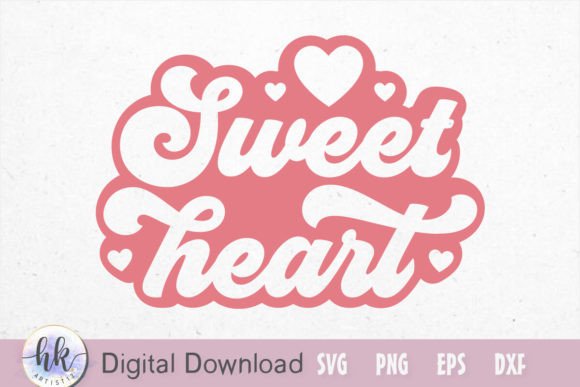
As someone who’s launched over 200 digital product listings across Etsy, Creative Market, and Shopify—and built a full-time income from design assets—I opened Sweet Heart Retro SVG expecting charm, not clutter. What I found was a tight, cohesive graphic design asset that leans into nostalgic warmth without veering into dated cliché. It’s not “vintage” in the dusty-attic sense—it’s retro with rhythm: soft curves, balanced negative space, and a hand-drawn sweetness that reads feminine but never saccharine. Think mid-century valentines meets modern minimalism—ideal for buyers who want heartfelt, not hokey.
First Impressions: Mood, Audience & Niche Fit
The design feels intentionally restrained—no excessive swirls or over-rendered textures. That restraint makes it unusually versatile. It appeals to Etsy shoppers searching for “retro Valentine’s printable,” Canva template sellers building romantic-themed planners, and print-on-demand shops curating small-batch mugs or totes. It’s also strong for Cricut users: clean outlines, no overlapping paths, and consistent stroke weight mean reliable cuts on vinyl or iron-on. I tested it against a dark denim mockup and a blush matte mug—both held up visually, thanks to its high-contrast silhouette and intentional spacing.
Real-World Product Testing Before Listing
I treated Sweet Heart Retro SVG like any new commercial design: I stress-tested it across six product types before drafting a single listing:
- SVG products: Bundled it with two complementary retro hearts (one outlined, one filled) as a “Retro Love Cut Files” pack for Cricut and Silhouette users. Verified cut lines in Design Space—no stray nodes or hidden layers.
- Printable design: Placed it at center of an 8×10 printable wall art file (300 dpi, CMYK-ready). Paired with a light serif font for “Be Mine”—clean, legible, shelf-ready.
- T-shirt design: Scaled to 10″ wide on a unisex crewneck mockup. Worked best on heather grey and cream—not black, where fine inner details faded.
- Canva template: Embedded into a Valentine’s Day social media post template (1080×1080). Used as both focal graphic and subtle watermark pattern in the background layer—scaled down 40% with 15% opacity.
- Greeting card: Combined with a handwritten script font and subtle halftone texture overlay. Printed a physical proof: crisp edges, no pixelation, transparent PNG background held up perfectly on glossy cardstock.
- Digital download bundle: Added to a “Retro Romance Kit” with matching patterns, frames, and 3 coordinating color palettes—increased perceived value without inflating file count.
Where This Graphic Design Asset Shines
Sweet Heart Retro SVG excels where visual clarity and emotional resonance intersect. It lifts product mockups—especially on neutral or pastel backgrounds—because it carries personality without demanding attention. For Etsy sellers, that means stronger thumbnail appeal: it reads instantly at 200px width. On print-on-demand platforms, it performs well on mugs, tumblers, and nursery prints because the shape is forgiving across curved surfaces. As part of a seasonal bundle, it anchors visual storytelling—think “Retro Valentine’s Collection” with coordinated stickers, planner tabs, and gift tags. And for small business branding? It adds warmth to packaging design or email headers without diluting brand identity.
Where to Use It Carefully
This isn’t a one-size-fits-all workhorse. Avoid using it:
- As a tiny sticker detail—inner linework loses definition below 0.75″ height.
- On busy, textured backgrounds—the retro charm gets lost in visual noise.
- In text-heavy Canva templates where it competes with headlines—use it as accent, not anchor.
- For sublimation on dark polyester unless you add a white underbase layer first (the PNG transparency won’t carry white ink).
- In low-resolution print products (e.g., cheap greeting cards printed at 150 dpi)—fine curves may soften unpredictably.
Practical Seller Notes You’ll Actually Use
Before uploading to any creative marketplace, I always run this checklist:
- Test the SVG in Cricut Design Space and Silhouette Studio—confirm no double-cutting or offset issues.
- Preview the PNG at actual size on both white and charcoal backgrounds—verify transparency holds and contrast remains strong.
- Open the EPS in Illustrator and check for embedded fonts or raster effects (none here—clean vector only).
- Print a physical sample at 6×6 inches on matte photo paper—look for edge smoothness and color fidelity.
- Organize customer files clearly: “Sweet_Heart_Retro_SVG,” “Sweet_Heart_Retro_PNG_300dpi,” etc.—no underscores missing, no version numbers buried in filenames.
- Pair it thoughtfully: works with serif (Playfair Display), sans serif (Montserrat), script (Dancing Script), and display fonts (Bebas Neue)—but avoid pairing with more than one decorative typeface per layout.
- Confirm commercial license terms—this asset permits finished product sales (t-shirts, mugs, stickers) but doesn’t allow resale of the raw SVG as a standalone clipart pack.
Final Verdict for Digital Product Creators
Sweet Heart Retro SVG isn’t flashy—but that’s its strength. It’s a quiet performer: reliable across formats, respectful of production constraints, and emotionally precise for its niche. For sellers building seasonal collections, launching a handmade business, or expanding their library of commercial design assets, it fills a specific, valuable gap: retro charm without visual fatigue. It won’t go viral on Pinterest alone—but paired with thoughtful mockups, smart bundling, and clear usage guidance, it earns steady clicks, repeat customers, and five-star reviews about “perfect vintage vibes.” If you’re evaluating graphics for your next Etsy drop or Canva template shop update, this one deserves a spot in your test folder. Just remember: its power lies in context, not isolation.